How to Choose the Best Swivel Seat for Your Car
Getting in and out of a vehicle shouldn’t feel like a daily struggle. If you or a loved one finds transferring from a mobility device or twisting, lifting legs, and lowering into a seat difficult, a swivel seat for car access can be one of the most effective mobility adaptations available.
In this guide, we’ll explain how swivel car seats for disabled drivers and passengers work, what types are available, how to check vehicle swivel seat compatibility, and what to consider when choosing the best car swivel seat for your needs.
Want the right solution first time? Book an assessment with Mobility in Motion and we’ll help you find the best swivel seat for your vehicle, body movement, and lifestyle.
Not sure whether you need a swivel seat or a transfer plate? Read our full guide: Swivel Seats vs Transfer Plates: Which is Right for You?
What Is a Swivel Seat for a Car?
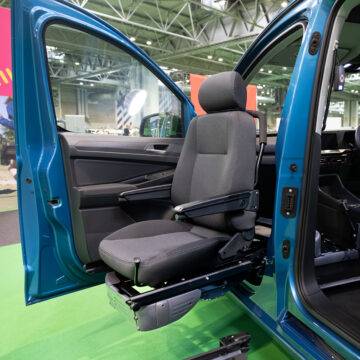
A swivel seat for car access is a specially adapted vehicle seat that rotates to face the door, making it easier to transfer into the car without twisting your hips, knees, or spine.
Instead of forcing your body to rotate inside the vehicle, the seat rotates for you. This is especially helpful for wheelchair users and people with:
- Reduced mobility
- Arthritis
- Hip or knee replacements
- Multiple sclerosis (MS)
- Parkinson’s disease
- Stroke recovery needs
- Chronic back pain
- Balance difficulties
Many people refer to these as turning car seats or rotating car seats, and they’re one of the most popular vehicle adaptations for improving independence.
If you’re unsure whether a swivel seat is right for you, book an assessment and our specialists will recommend the best option.
Who Benefits Most from Swivel Car Seats for Disabled or Elderly Users?
Swivel seats are commonly fitted for people who struggle with:
- Transferring from a walking aid or wheelchair into a vehicle
- Lowering into car seats
- Twisting the torso or lifting legs into the footwell
- Maintaining balance during entry/exit
A properly fitted swivel seat can help prevent:
- Falls when getting out of the car
- Pain flare-ups after travel
- Reliance on carers or family members
Types of Swivel Seats for Cars (Manual vs Powered Options)
There isn’t one universal “best” swivel seat. The right option depends on your mobility, movement range, and your vehicle.
Below are the most common types of swivel seats for cars.
Manual Swivel Seat for Car Access
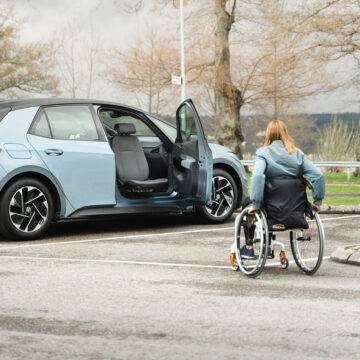
A manual swivel seat such as our Turnout & Turny Manual Swivel Seat rotates using a lever mechanism. These can work well for people who have:
- Good upper body strength
- Stable balance
- Enough control to rotate and lock the seat safely
Manual options are typically more cost-effective, but may not be suitable if you struggle with grip strength or fatigue.
Powered Swivel Seat (Electronic Rotation)
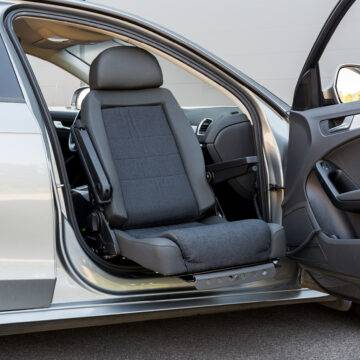
Powered swivel seats such as our Turny Low and Turnout E Swivel Seats rotate at the touch of a button. These are ideal for users who need minimal effort and maximum support.
Powered swivel seats are often recommended as the best swivel seat for elderly passengers, especially where stiffness or reduced strength is a concern.
They can provide:
- Smoother movement
- Safe and independence transfers
- Easier locking and positioning compared to a manual swivel seat
Swivel and Lowering Seats (Rotating + Transfer Assistance)
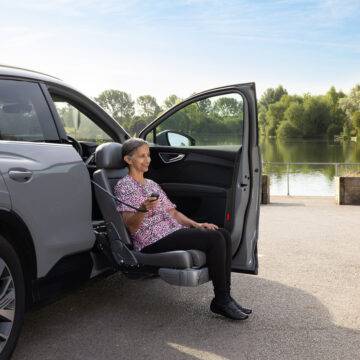
A swivel and lowering seat like the Turny Orbit and Turny Evo Swivel Seats rotate outward and lower toward the ground, making transfers far easier.
These are among the most advanced rotating car seats for disabled users, often used by people transferring from a mobility device where the height difference from the device to the car seat is too great to transfer.
This is often the best option for independent use and supports assisted transfers by reducing manual handling for the caregiver.
Wheelchair Seat Transfer Systems
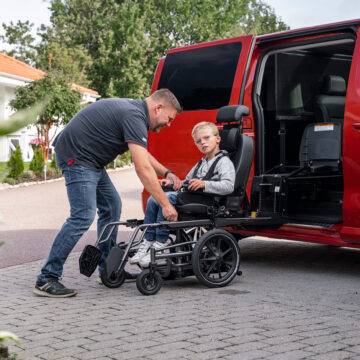
The most comprehensive solution within our range of swivel seats is the Carony Wheelchair Swivel Seat. This becomes your car seat which allows you to transfer the seat rather than the person.
This wheelchair system allows you to remain comfortably in your car seat while it rotates out of the vehicle and locks onto a wheelchair base.
This transfer method removes the requirement for a caregiver to physically lift the user as part of their transfer.
What Makes the Best Car Swivel Seat?
The “best” swivel seat depends on your physical mobility, your vehicle, and how you travel day-to-day.
When deciding on the best car swivel seat, consider:
Comfort and Posture Support
If you drive or travel frequently, posture matters. The best swivel seats should support:
- Lower back
- Hips and pelvis alignment
- Thighs and knee position
Ease of Operation
If rotating the seat causes strain, you may need a powered solution rather than a manual swivel.
Vehicle Compatibility
Not every seat works with every vehicle. Compatibility is one of the most important factors and often the most overlooked.
With a Mobility in Motion assessment, our specialists will check all of these factors, carry out a demonstration and recommend the right solution for your personal needs. Get in touch to arrange your complimentary assessment and discover the freedom of easy transfers.
Can You Put a Swivel Seat in Any Car?
This is one of the most common questions, and the honest answer is: not always.
While many cars can be adapted, you cannot automatically fit a swivel seat into every make and model. Even if a product physically fits, it must also be checked alongside the individual user as height, leg room, neck movement can affect compatibility.
Vehicle compatibility depends on:
- Door width and access angle
- Seat height from ground
- Distance between seat and dashboard
- Clearance between seat and B-pillar
- Vehicle electrics (for powered seats)
- The user’s individual mobility & height
That’s why a professional compatibility check is essential. The fastest way to confirm compatibility is to book an assessment, we’ll check your car and recommend a solution that works safely.
Turning Car Seats vs Rotating Car Seats: Is There a Difference?
In most cases, turning car seats and rotating car seats are simply different phrases for the same type of adaptation.
However, some people use:
- Turning car seat to describe basic manual swivel systems
- Rotating car seat to describe powered or automated swivel and lowering systems
In practical terms, both describe seats designed to rotate outward for easier access.
How Much Does a Car Swivel Seat Cost?
Costs vary depending on the type of swivel seat for car access you need, your vehicle, and the level of support required.
We provide transparent pricing on our website to help you understand typical costs upfront. However, the exact final quote will always be confirmed after a full assessment, once we’ve recommended the most suitable solution for your needs and vehicle.
This is because we offer a wide range of swivel car seats for disabled users, including different seat types, rotating systems, and supportive accessories that can influence the overall specification.
All of our pricing includes:
- Professional installation by trained specialists
- A 3-year warranty for complete peace of mind
A basic guide to pricing levels:
- Manual swivel seat: usually the most cost-effective option
- Powered swivel seat: mid to higher cost depending on features such as electric rotation and ease of use
- Swivel and lowering seat systems: typically the highest cost due to advanced functionality, complexity, and tailored installation requirements
Why a Professional Assessment Matters
A swivel seat is not just a convenience feature, it’s a safety-critical mobility adaptation.
A proper assessment ensures:
- Correct seat positioning
- Safe and tested installation
- Comfort and posture support
- Suitability for your individual mobility needs
- Compatibility with your vehicle model
Most importantly, an assessment ensures you get a solution that improves independence, not one that creates new challenges.
Book your assessment to find the best swivel seat for you
FAQ: Swivel Seats for Cars (Compatibility, Costs & Best Options)
Below are the most common questions people ask about swivel car seats for disabled users and elderly passengers.
Can you put a swivel seat in any car?
Not always. While many vehicles can be adapted, compatibility depends on door width, height and the user’s mobility. A professional assessment is the best way to confirm suitability.
Book an assessment to check whether your car can be fitted with a swivel seat.
How much does a car swivel seat cost?
Costs vary depending on whether the swivel seat is manual or powered, and whether lowering functionality is required.
Book an assessment to receive a tailored quote for your vehicle and needs.
What is the best swivel seat for the elderly?
The best swivel seat for elderly users is often a powered swivel seat, as it reduces physical strain and makes entry/exit safer. Swivel and lowering seats may be best for those with limited strength or balance issues.
Can a swivel seat be fitted to the driver’s side?
Yes, swivel seats can often be installed on the driver’s side, but this depends on steering column clearance, and the user’s height/requirement for leg room.
Book an assessment to confirm driver-side installation compatibility.
How do I know if a swivel seat fits my car?
The best way is through a professional mobility assessment. Vehicle swivel seat compatibility depends on door space, foot well clearance alongside the user’s height and mobility requirements.
At Mobility in Motion we assess these factors and your individual needs to recommend the right solution for you.