UK Disability History Month 2025
Written by Chiara Torr-Norris, Marketing Executive
Each year, UK Disability History Month (UKDHM) provides an important opportunity to recognise, reflect on, and celebrate the lives, experiences, and contributions of disabled people throughout history.
Running from 20th November to 20th December, Disability History Month 2025 focuses on this year’s thought-provoking theme “Disability, Life and Death.”
At Mobility in Motion, we believe that everyone deserves to live with dignity, independence, and respect. By reflecting on this year’s theme, we can deepen our understanding of the barriers many disabled people continue to face and renew our commitment to creating a more accessible, inclusive world for all.
What is the UK Disability History Month?
UK Disability History Month is an annual event that shines a light on the history, achievements, and ongoing struggles of disabled people in the UK.
It was established to challenge the discrimination and exclusion that disabled people have experienced throughout history, while also celebrating progress made towards equality and inclusion.
The month-long campaign encourages schools, workplaces, and communities to engage in conversations about disability rights, accessibility, and representation, all of which play a vital role in building a fairer society.
So yes, there is a Disability History Month. And it’s a time to listen, learn, and take action.
What is the theme for Disability History Month 2025?
For UK Disability History Month 2025, the theme is “Disability, Life and Death.”
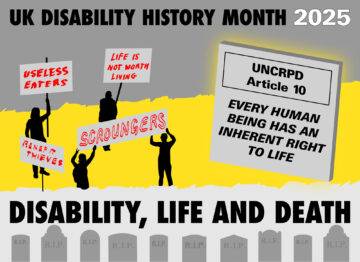
This year’s theme invites us to explore how society values the lives of disabled people. It encourages reflection on the systems, attitudes, and choices that shape how disabled people experience life, health, care, and end-of-life decisions.
The topic also addresses complex and deeply personal discussions, such as the ongoing debate around assisted dying and how disabled voices are often excluded from shaping these conversations.
By engaging with this theme, Disability History Month 2025 asks us to look closely at what it means to live a full, supported life and how we can work together to ensure every life is respected and valued equally.
What is the purpose of Disability Awareness Month?
The purpose of Disability History Month (often also called Disability Awareness Month) is to raise awareness of disability rights and to celebrate the contributions of disabled people, both past and present.
It’s about more than awareness; it’s about change. The month provides a platform to:
- Highlight the history and resilience of the disabled community.
- Challenge stereotypes and misconceptions about disability.
- Encourage inclusive action in workplaces, schools, and public spaces.
- Recognise that disability is an essential part of human diversity.
Through education, conversation, and advocacy, UK Disability History Month 2025 encourages everyone to reflect on how we can build a society that values every life equally, regardless of ability.
How to Mark UK Disability History Month 2025
There are many ways individuals and organisations can take part in Disability History Month 2025. Here are a few ideas:
- Learn about the history of disability rights in the UK — from the Disability Discrimination Act 1995 to the Equality Act 2010.
- Host discussions or events around the theme “Disability, Life and Death” to encourage open dialogue about equality, care, and human value.
- Share stories and experiences from the disabled community to highlight diverse perspectives and lived experiences.
- Review your accessibility policies to ensure that spaces, services, and communication are inclusive for all.
- Use your voice to share information about UK Disability History Month 2025 on social media using hashtags and the official UKDHM resources.
Every action, no matter how small, contributes to a greater understanding and a stronger culture of inclusion.
Why It Matters to Us at Mobility in Motion
At Mobility in Motion, we’re proud to support and empower disabled people through driving aids and mobility solutions that promote freedom, comfort, and independence.
Recognising UK Disability History Month 2025 allows us to honour the resilience and achievements of the disabled community while reflecting on our ongoing responsibility to make life more accessible.
This year’s theme reminds us that mobility isn’t just about getting from one place to another; it’s about living fully, with dignity and self-determination. Every life deserves equal respect, care, and opportunity in every moment, from birth to death.
At Mobility in Motion, we are committed to making car travel accessible to all through our wide range of vehicle adaptations. So you can enjoy all the benefits of owning a car, whether it be for reliable commutes, popping to the shops, taking road trips with loved ones and everything in between! Get in touch with our team to find out how we could help you.
We also have a blog exploring the importance of UK Disability Pride Month which promotes celebrating your journey and achievements.
News
What do PIP changes mean for your mobility?
PIP is under review. Find out what the Timms Review could mean for your mobility allowance and Motability car, and your options for staying mobile.

News
The Adaptation Gap
Disabled people know adapted driving exists, but three in four don’t know if they qualify for help.

Accessible travel
Making Family Life Easier: Choosing The Right Vehicle For Disabled Families
Whether you’re transporting a wheelchair, or adapting the vehicle for a disabled driver, find out how to choose the right vehicle.

Chiara Torr-Norris
Chiara is a Marketing Executive at Mobility in Motion with eight years of marketing experience, including over six years within the mobility industry. She creates informative, accessible content around mobility, independence and inclusive living.
Growing up alongside a sibling with learning difficulties shaped Chiara’s understanding of the importance of independence, confidence, and inclusion. Today, she combines this personal perspective with her industry knowledge to create helpful, well-researched content that challenges perceptions around mobility and helps individuals and their families make informed, confident decisions about their independence.