Can I Learn to Drive with a Disability?
Learning to drive is a major milestone, whether you’re aiming for independence, freedom, or simply the joy of being on the road. For teens and young adults with disabilities or long-term health conditions, it’s normal to wonder if this is possible. The good news? Most people can learn to drive safely with the right support, adaptations, and guidance.
This guide will answer your top questions, bust common misconceptions, and point you to actionable next steps so you can start your driving journey with confidence.
Who Can Learn to Drive?
- Individuals with physical or long-term health conditions can often learn to drive.
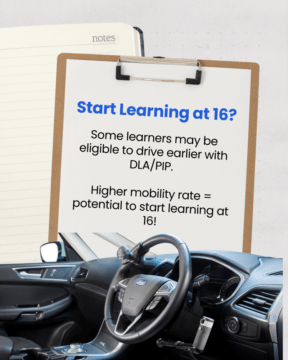
- Some learners may even start at 16 if they receive the higher mobility component of DLA or PIP; something many people don’t know.
- Myth-busting: You do not need to be “able-bodied” to drive safely.
Tip: Early research and support from a trained assessor can help you understand what’s possible for your unique situation.
Understanding Disability Driving Assessments

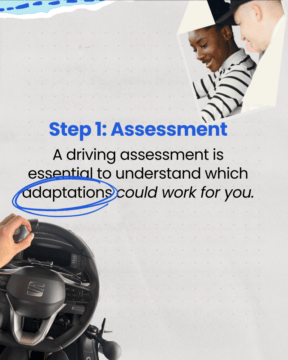
A driving assessment is a personalised review of your abilities and needs. It helps identify:
- Driving adaptations that will make driving safe and comfortable.
- Safe driving techniques tailored to your condition.
- Learning and training recommendations for your first lessons.
These assessments are conducted by professionals, and you can learn more here: What to Expect During a Disability Driving Assessment.
How Adaptations Make Driving Possible
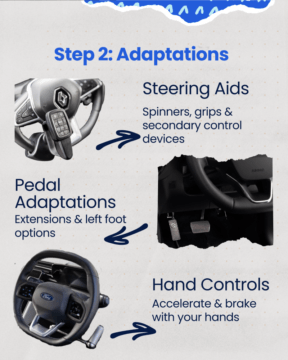
Driving adaptations are tools that allow people with disabilities to operate vehicles safely. Examples include:
- Hand controls to operate the brake and accelerator by hand, rather than foot
- Steering aids which support safe one-handed steering
- Pedal extensions bring the foot pedals closer if you’re unable to reach
- Left-foot accelerators allow you to operate the accelerator with your left foot
Key point: Adaptations can be fitted to Motability vehicles or your own car, depending on your preference. You can explore detailed guidance here: Adapting Your Own Car for Accessibility.
Step-by-Step Guide for Learners
Research eligibility: check DLA/PIP rates if starting under 17.
Book a driving assessment: professional guidance is crucial.
Try out adaptations: demo cars help you find what works best.
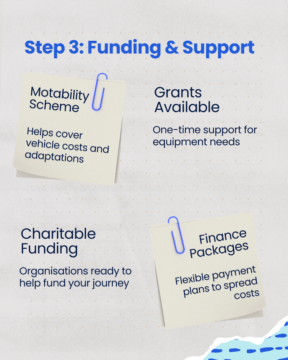
Explore Funding Options: Motability Scheme, Charity, Grants & Finance.
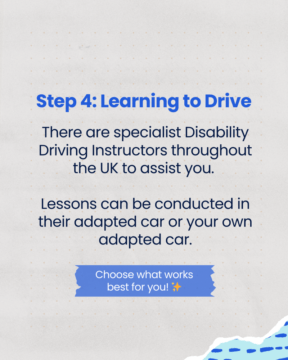
Start lessons: begin in quiet areas and gradually build confidence.
Celebrate independence: first solo drive, playlist creation, or first drive-thru stop!
Confidence Tips for Learners
Building confidence is just as important as learning the technical skills to drive. Many learners with disabilities worry about whether they can do it, but the right approach can make all the difference:
Start small and celebrate wins
- Begin with short drives in familiar, quiet areas.
- Celebrate each milestone, even simple achievements like mastering hand controls or navigating a roundabout. Every step counts.
Visualise success
- Imagine completing your first solo drive, hitting the drive-thru, or driving to a friend’s house independently. Manifestation can reduce anxiety and boost confidence.
Use demo cars or taster sessions
- Experiencing adaptations firsthand before committing to lessons helps you feel more comfortable and in control.
Watch real-life examples
- Check out TikToks showing learners and young drivers using adaptations successfully. Seeing others in similar situations helps normalize the experience and inspires confidence.
Remember: “You Can Do This”
- Confidence isn’t about perfection, it’s about persistence. Most people with disabilities drive safely and independently, and you can too.
Start Your Journey!
You don’t need to wait, adaptations can make driving possible for you. Chat with our friendly team to explore what could work for your car and your needs. Whether it’s hand controls, pedal adjustments, or steering aids, we’ll help you find the solution that gets you moving. You’ve got this, let’s make it happen.
FAQs About Learning to Drive with a Disability
Can I learn to drive if I have a physical disability?
Yes! Many learners with physical disabilities drive safely using adaptations such as hand controls, steering aids, and pedal adaptations. A professional driving assessment can recommend the best solutions for your needs.
At what age can I start learning to drive with a disability?
In the UK, most learners start at 17. However, if you receive the higher mobility component of DLA (as a child) or PIP (as an adult), you may be eligible to start lessons at 16.
Do I need a Motability car to learn to drive with adaptations?
No, adaptations can be fitted to your own car as well as Motability vehicles. You can explore options with Mobility in Motion.
What should I expect during a disability driving assessment?
The assessment will evaluate your abilities and recommend:
- Suitable vehicle adaptations
- Techniques for safe driving
- Next steps for lessons and training
Learn more here: What to Expect During a Disability Driving Assessment.
Are driving lessons with adaptations more expensive?
Costs vary depending on your adaptations and location, but there are some funding options available. Many learners also find Motability help make it affordable.
Can I still take a standard driving test if I use adaptations?
Yes! The DVLA and examiners are familiar with adaptive driving techniques. Your examiner will be made aware of any adaptations before the test