How to Help Elderly Get In and Out of a Car Safely (Without Injury)
Written by Chiara Torr-Norris, Marketing Executive
Helping an elderly person in and out of a car can be challenging and physically demanding for both the person and their caregiver. Whether it’s for daily errands, medical appointments, or social outings, the right techniques, mobility aids, and adaptations can make the process safer, easier, and more comfortable for everyone.
At Mobility in Motion, we help families and caregivers find solutions that reduce strain, improve safety, and give elderly passengers independence.
Why Getting In and Out of a Car Can Be Difficult
As we age, simple tasks like getting into a car can become harder due to:
- Arthritis or joint stiffness
- Hip or knee replacements
- Reduced strength and flexibility
- Balance or mobility limitations
These challenges increase the risk of slips, falls, or injury, not just for the elderly person, but also for the caregiver assisting them.
Safe Techniques for Helping Elderly Passengers
Even without adaptations, there are techniques caregivers can use to reduce risk:
- Plan the transfer – Ensure the car is parked on a flat surface, handbrake on, and seat adjusted for comfort.
- Face each other – When possible, have the person enter facing you for added support.
- Use your legs, not your back – Bend at your knees and keep your back straight when supporting weight.
- Move slowly – Rushing increases risk for both parties.
- Use grab handles or armrests – Helps the passenger stabilize themselves during transfer.
Tip: Even small changes in technique can dramatically reduce caregiver strain and make the transfer smoother.
Solutions to Reduce Carer Strain
Helping an elderly passenger into a car can put strain on your back, shoulders, and arms. The right mobility aids and adaptations can make transfers safer, easier, and more comfortable for both the passenger and the caregiver. Here are three solutions that can make a real difference:
Transfer Plates
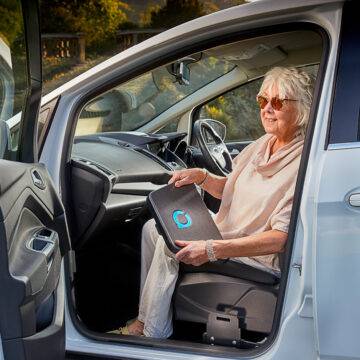
A transfer plate creates a safe and stable bridge between the car seat and wheelchair, allowing passengers to perch first, then slide across safely. This reduces the need for lifting, minimises twisting, and can even support independent transfers.
Swivel Seats
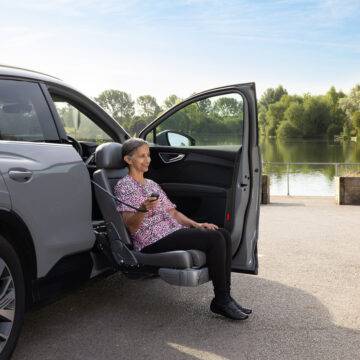
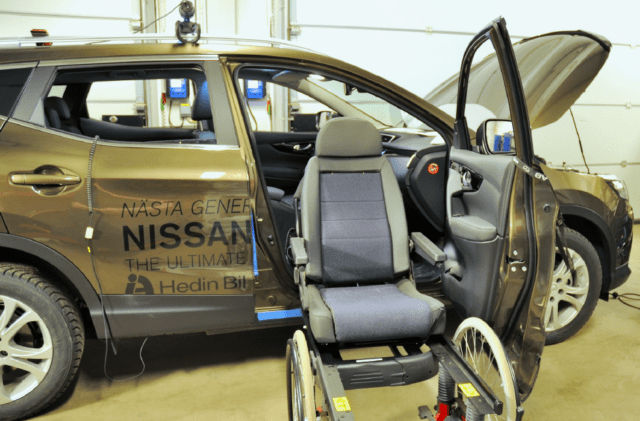
Swivel seats rotate and lower to make entry and exit much easier. They reduce twisting and bending, helping both the passenger and caregiver. Perfect for those with hip, knee, or back limitations, swivel seats restore independence and make daily journeys safer.
Person Hoists
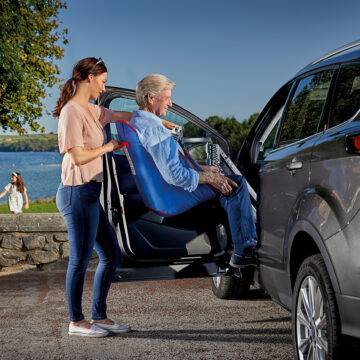
Person hoists lift passengers safely out of their wheelchair and into the car seat, removing the need for manual lifting. Ideal for those with limited mobility who are unable to assist with a self-transfer, these hoists help prevent caregiver injuries while giving passengers confidence and support.
Practical Tips for Caregivers
- Keep a routine: Regular practice helps both caregiver and passenger feel confident.
- Encourage independence: Allow the passenger to use armrests, grab bars, and adaptations as much as possible.
- Choose the right vehicle: Some cars and vans are easier to transfer into than others.
- Consider vehicle adaptations early: Even small changes can make a big difference over time.
Real-Life Example: Elizabeth’s Story
Elizabeth Hobbs, a devoted caregiver, struggled to help her mother get in and out of the car safely. After installing a swivel seat, the difference was immediate:
“The swivel chair is fantastic, without it I wouldn’t be able to get Mum out.” – Elizabeth Hobbs, Trustpilot 5 stars
Swivel seats allow the passenger to rotate and lower, reducing twisting and lifting strain for caregivers. For Elizabeth, it meant safer transfers, less physical strain, and peace of mind.
This simple adaptation restored independence for her mother and confidence for Elizabeth, showing how the right mobility solution can transform everyday routines.
Ready to find the right solution for your loved one?
Arrange a mobility assessment today and discover the adaptations that make transfers safer, easier, and more comfortable.
Frequently Asked Questions
What is the safest way to help an elderly person get in and out of a car?
Use proper lifting techniques: bend your knees, keep your back straight, and move slowly. Mobility aids and adaptations like swivel seats, transfer plates, or person hoists can make transfers safer for both the passenger and caregiver.
What mobility aids help elderly passengers get into a car?
Common aids include swivel seats, which rotate and lower the passenger; transfer plates, which allow sliding from wheelchair to seat; and person hoists, which lifts a wheelchair user safely into the car. These solutions reduce strain and improve independence.
How can caregivers reduce strain when helping elderly passengers?
Using car transfer aids for elderly passengers, planning the transfer, and encouraging passengers to use grab handles or armrests can prevent injury.
Can all vehicles be adapted for elderly passengers?
Most cars and vans can be fitted with adaptations like swivel seats or transfer plates. A mobility in motion assessment will determine the right solution.
How do I choose the right adaptation for my loved one?
A mobility assessment considers the passenger’s abilities, the type of vehicle, and lifestyle needs. This ensures the solution is safe, comfortable, and tailored to your situation.
Take the Next Step
At Mobility in Motion every customer begins with a mobility assessment, which is a standard and essential part of our process. This assessment allows us to understand your needs in detail and recommend the right adaptations to ensure safety, comfort, and independence.
- Identify the best adaptations for your car and passenger
- Reduce caregiver strain and improve safety
- Find solutions that restore independence and confidence

Driving with adaptations
Car Insurance for Disabled Drivers
Learn how car insurance works for adapted cars. Discover what to declare, common misconceptions and how Adapt & Drive can help.
Accessible travel
Who Can Drive a Motability Car?
One question continues to come up time and again: who can actually drive a Motability car? Here we outline the simple guidance.
Accessible travel
The Best Used Cars for Disability Adaptations (2026 Expert Guide)
Looking for the best used car to adapt for a disability? Discover our top 5 recommendations, expert buying advice, typical prices and compatible vehicle adaptations.

Chiara Torr-Norris
Chiara is a Marketing Executive at Mobility in Motion with eight years of marketing experience, including over six years within the mobility industry. She creates informative, accessible content around mobility, independence and inclusive living.
Growing up alongside a sibling with learning difficulties shaped Chiara’s understanding of the importance of independence, confidence, and inclusion. Today, she combines this personal perspective with her industry knowledge to create helpful, well-researched content that challenges perceptions around mobility and helps individuals and their families make informed, confident decisions about their independence.