Boot Hoist vs Platform Lift: Which Wheelchair Lift Is Right for Your Vehicle?
Transporting a wheelchair or mobility scooter shouldn’t be difficult or physically demanding. The right vehicle adaptation can make loading and unloading your mobility equipment far easier and safer.
Two of the most common wheelchair lifts for vehicles are boot hoists and platform lifts. Both are designed to help lift heavy mobility equipment into a car without manual lifting, but they work differently and suit different vehicles and mobility devices.
If you’re comparing boot hoist vs platform lift, this guide explains how each option works, the key differences between them, and which might be the best solution for your needs.
If you’re exploring all ways to transport your wheelchair, you might also want to read our guide on boot hoists vs wheelchair roof boxes. That article covers an alternative solution for drivers who require a way to store their wheelchair once they’re already seated in the car.
What Is a Boot Hoist?
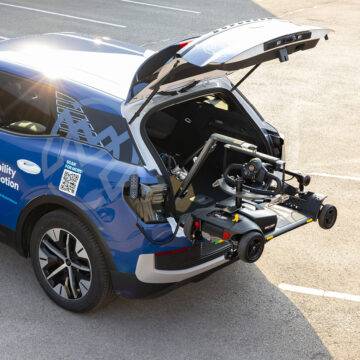
A boot hoist is a powered lifting device installed in the boot of a car. It uses a lifting arm and strap attachment to raise a wheelchair, powerchair or mobility scooter from the ground and place it into the vehicle.
Most boot hoists are powered by the vehicle’s battery and controlled using a handheld remote.
Advantages of a Boot Hoist
- Fits a wide range of vehicles including hatchbacks, estates, and SUVs
- Compact design that leaves usable space in the boot
- Can lift many wheelchairs, powerchairs and mobility scooters
- Minimal physical effort required to load equipment
Boot hoists are one of the most popular vehicle adaptations because they work with many standard cars.
Things to Consider
- Some mobility scooters may need to be folded or partially dismantled
- You need to attach lifting straps to the wheelchair or scooter
- Boot size and opening height can affect compatibility
For many drivers, a boot hoist is the most practical solution when vehicle space is limited.
What Is a Platform Lift?
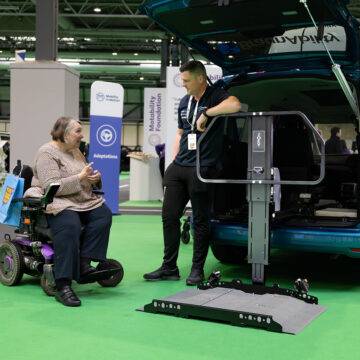
A platform lift is another type of wheelchair lift designed to load mobility devices into a vehicle using a flat platform.
Instead of attaching lifting straps, the wheelchair or scooter is rolled onto the platform, which then lifts the device into the vehicle. This means the mobility device stays upright throughout the loading process.
Advantages of a Platform Lift
- No need to dismantle the wheelchair or scooter
- Wheelchair remains stable on the platform
- Ideal for taller mobility devices
- Less manual handling required
Platform lifts are commonly used with larger vehicles such as vans and MPVs where there is enough space for the platform mechanism.
Things to Consider
- Requires significantly more space than a hoist
- Often takes up most of the vehicle’s boot area
- Not suitable for many smaller vehicles
Because of their size, platform lifts are typically chosen when a user is unable to comfortably operate a boot hoist.
Try them out for yourself!
Book your demonstration today and see which solution is right for you.
Boot Hoist vs Platform Lift: Key Differences
When deciding between a platform lift vs vehicle hoist, the biggest differences come down to space, vehicle compatibility, and how the equipment is loaded.
| Feature | Boot Hoist | Platform Lift |
| How it works | Lifts wheelchair or scooter using a powered arm | Mobility device rolls onto a lifting platform |
| Vehicle compatibility | Suitable for most type of cars including compact hatchbacks to large SUV’s | Requires larger van style cars |
| Space required | Compact design | Requires significant boot space |
| Device handling | May require folding or attaching straps | Device stays upright on platform |
| Best for | Most wheelchairs and scooters | Larger or taller mobility devices |
| Cost | More affordable; prices start from £1,295, most popular model £1,895 (includes installation & 3-year warranty) | More expensive; starts from £4,095 (includes installation & 3-year warranty) |
Are Platform Lifts Safer Than Boot Hoists?
Both platform lifts and boot hoists are designed with safety in mind and can securely transport wheelchairs and mobility scooters.
The safest option will always be the one that:
- Works with your specific wheelchair or scooter
- Fits correctly inside your vehicle
- Is professionally installed and demonstrated
Because every setup is different, many drivers benefit from trying different wheelchair lifts during a professional assessment before choosing the right solution.
Not Sure Which Option Is Right for You?
Choosing between a boot hoist vs platform lift depends on several factors, including:
- The size and weight of your wheelchair, powerchair or mobility scooter
- The type of vehicle you drive
- How much space is available in your boot
- How easy the loading process needs to be for you
Because every vehicle and mobility device combination is different, the best solution is often determined through a professional mobility assessment.
At Mobility in Motion, our specialists will assess your vehicle, mobility equipment, and personal needs to recommend the safest and most practical solution.
Your Questions, Answered About Boot Hoists and Platform Lifts
Do I Need to Dismantle My Scooter to Use a Boot Hoist?
Sometimes.
Many smaller mobility scooters and folding wheelchairs can be lifted whole, but larger scooters may need to be partially dismantled, such as removing the seat or back rest, so they fit inside the vehicle.
This depends on the size of your mobility scooter vs the available boot space in your vehicle
What Is the Difference Between a 2-Way and a 4-Way Hoist?
The difference is how the vehicle hoist moves.
Two-way hoists
- Move up and down only
- Require you to guide the wheelchair or scooter into the boot
- Typically used for lighter mobility devices
Four-way hoists
- Move up, down, in, and out
- Automatically swing the mobility device into the vehicle
- Easier to operate for larger scooters or wheelchairs
Four-way hoists are usually the most convenient option for everyday use.
Does a Platform Lift Take Up More Space Than a Hoist?
Yes, significantly more.
A platform lift requires enough room for the lifting platform and the mechanism that moves it in and out of the vehicle. This is why platform lifts are typically fitted in larger vehicles such as vans or MPVs.
In comparison, boot hoists are compact and designed to fit inside standard car boots, making them suitable for many hatchbacks and SUV’s.
Which Is Better for Heavy Scooters: a Boot Hoist or a Platform Lift?
Boot hoists actually have a heavier lifting capacity of up to 200kg, whereas a platform lift is suitable for devices weighing up to 159kg.
Can I Fit a Platform Lift in a Hatchback?
No. Platform lifts require larger vehicles with wider openings and deeper load space, such as vans or MPV’s.
For most hatchbacks, a boot hoist is the more practical option because of its compact design.
Find the Right Wheelchair Lift for Your Vehicle
Both boot hoists and platform lifts can make transporting a wheelchair or mobility scooter much easier. However, the best option depends on your vehicle, mobility device, and mobility requirements.
At Mobility in Motion, we help drivers and passengers find the right vehicle adaptations through personalised mobility assessments.
During an assessment, our specialist will:
- Check compatibility with your vehicle
- Assess your wheelchair or mobility scooter
- Demonstrate different hoists and wheelchair lifts
- Recommend the safest and most practical solution for your individual needs
This ensures you choose an adaptation that genuinely works for your lifestyle.
Book a Mobility in Motion assessment today to find the best wheelchair lift for you.
Driving with adaptations
Best Car Adaptations for Electric Vehicles (EVs)
For drivers and passengers with mobility needs, the question often arises: how do I make my EV fully accessible
Product Guides
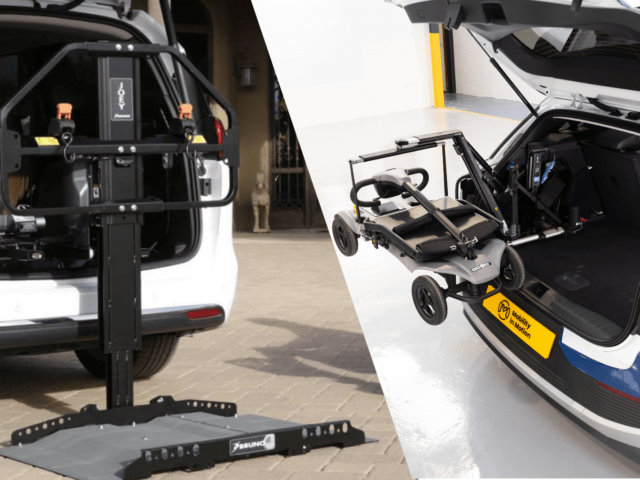
Boot Hoist vs Platform Lift: Which Wheelchair Lift Is Right for Your Vehicle?
Two of the most common wheelchair lifts for vehicles are boot hoists and platform lifts. But which is right for you and your vehicle?

Driving with adaptations
Funding, Motability, and Options for Young Drivers: How to Make Adaptive Driving Possible
There are multiple ways to fund adaptive driving. Understanding your options early can save time, stress, and make the journey to independence smoother.