Driving Adaptations Explained for Beginners: A Simple Guide for New Drivers
You might be closer to driving than you think
If you’ve ever thought driving wasn’t an option because of a disability, here’s something important to know:
Driving adaptations exist to support you.
They’re tools designed to help you control the car in a way that works for your body. And for many people, they’re the reason driving becomes possible in the first place.
Adaptations can support drivers with:
- Limited leg movement
- Reduced strength or coordination
- Limb difference
- Neurological conditions
- Chronic pain or fatigue
- Or many other physical or medical conditions
And the reality? Hundreds of thousands of people across the UK drive independently using them every single day.
This guide explains what adaptive driving is, what adaptations look like, and how beginners get started.
What are driving adaptations?
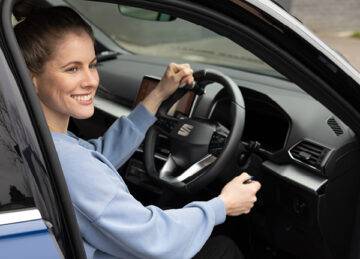
Driving adaptations are specialist modifications that help you operate your vehicle safely and comfortably.
They don’t change the purpose of driving, they simply change how you interact with the controls.
Think of them like accessibility features on your phone. They’re there to support you, not define you. The goal is always the same: give you independence and control.
Common types of driving adaptations explained
There are many different types of driving aids, but most fall into a few key categories.
Hand controls
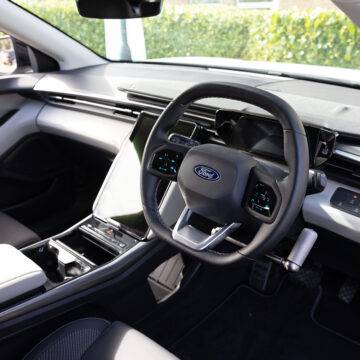
Hand controls allow you to control acceleration and braking using your hands instead of your feet. These are commonly used by drivers with limited lower-limb mobility.
They typically work by:
- Pushing to brake
- Pulling to accelerate
Many learners find them intuitive once they’ve practiced.
Steering aids
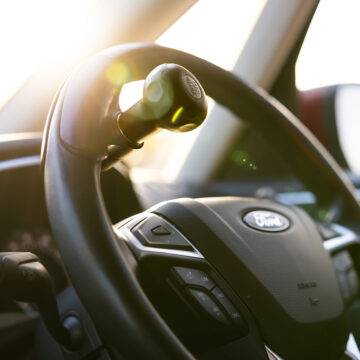
Steering aids help you maintain control of the wheel, especially if you have limited grip, strength, or use one hand. This is particularly essential for hand control drivers.
Examples include:
These allow for smoother, safer steering with less effort.
Pedal adaptations
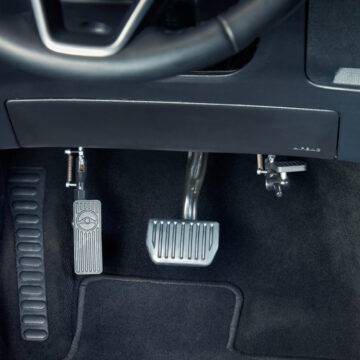
Pedal adaptations adjust the position or function of pedals to make them easier to use.
Examples include:
These can improve comfort, positioning, and control.
Secondary control devices
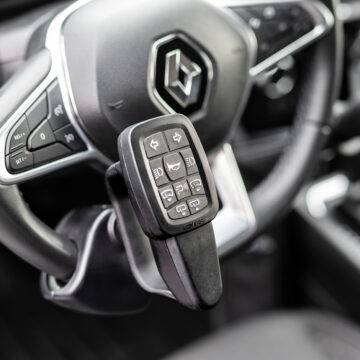
These secondary control adaptations make it easier to use things like:
- Indicators
- Horn
- Lights
- Wipers
All from one device. Ideal for users with limited dexterity within their hands who find it uncomfortable to reach to operate those functions. There is also a voice activated control for a completely hands-free solution to secondary functions.
We’re Here to Help
Our team can advise on the adaptations most suited to your needs and provide guidance on the driving assessment process.
What does driving with adaptations actually feel like?
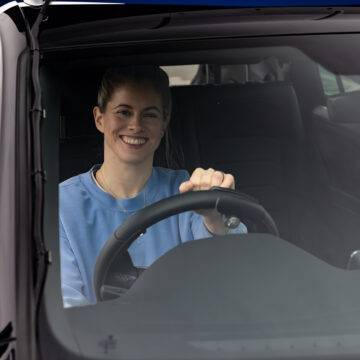
One of the biggest misconceptions is that adaptive driving feels complicated or unnatural. For those who drove without adaptations before, they quickly adjust. And for drivers learning with adaptations, it’s simply the norm!
Many describe it as natural, comfortable and empowering. And once you’re used to it, it simply becomes your normal way of driving.
You can see real examples of adaptive driving on Mobility in Motion’s social channels, where drivers demonstrate hand controls and other adaptations in action.
Can adaptations be added to different cars?
Yes. Adaptations can be fitted to many different vehicles, depending on the type of adaptation and your needs.
Some people use adapted vehicles through the Motability Scheme, while others choose to adapt their own car.
If you want to learn more about adapting your own vehicle, read our article: Adapting Your Own Car for Accessibility. This explains the process in more detail.
How beginners explore adaptations for the first time
If you’re new to adaptive driving, you don’t need to figure everything out alone.
Most beginners start by seeing adaptations demonstrated and trying them in a safe environment such as a disability driving assessment. This helps you understand what feels right for you.
Professional instructors and specialists can guide you through the process step-by-step.
If you’d like to learn more about training and courses, visit Accessible Driving Training: Finding the Right Course.
Adaptations don’t limit you, they enable you
This is one of the most important things to understand. Adaptations don’t take away independence. They create it.
They make things possible that might otherwise feel out of reach. Driving can mean:
- Getting to college or work independently
- Seeing friends without relying on lifts
- Having freedom on your own terms
Adaptations help make that happen!
Start Your Driving Journey
Ready to explore what adaptations could help you drive, contact our friendly team online or call us 0800 288 4422.
FAQs: Adaptive driving explained
Are car adaptations difficult to use?
No. Most drivers learn quickly, and adaptations are designed to feel natural.
Do adaptations make driving safe?
Yes. Adaptations are designed and installed to support safe driving and are recognised for use on UK roads.
Can young drivers use adaptations?
Yes. Many young drivers learn using adaptations and go on to drive independently.
Do adaptations look obvious?
Some are visible, but many are discreet and integrate naturally into the vehicle.