Why Lifting a Wheelchair/Scooter Into a Car Causes Injury – and How to Avoid It
For many wheelchair and mobility scooter users, and the people who support them, lifting equipment into a car boot becomes part of daily life. But what many don’t realise is that manual lifting is one of the leading causes of preventable injury, especially repetitive strain and back problems.
At Mobility in Motion, we regularly speak to customers who only explore lifting and stowage solutions after they’ve experienced pain, strain, or injury.
The good news? There is a safer, easier alternative.
The Hidden Risks of Lifting Wheelchairs and Mobility Scooters
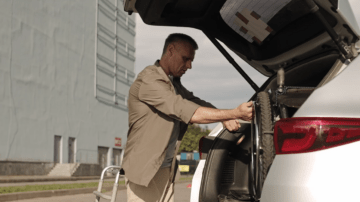
Understanding the risks of lifting wheelchairs manually is the first step toward protecting your long-term health.
Wheelchairs can weigh anywhere from 10kg to 30kg, while mobility scooters and powerchairs often exceed 40kg to 100kg. Repeated lifting of this weight can lead to:
- Lower back injuries
- Muscle strains and tears
- Shoulder and neck problems
- Repetitive strain injuries (RSI)
- Long-term spinal damage
These injuries don’t just affect professional carers, they’re incredibly common among:
- Disabled drivers loading their own mobility device
- Family members
- Spouses
- Support workers
This is why safe wheelchair loading should never rely on manual strength alone.
Can Carers Get Back Injuries From Loading Wheelchairs?
Yes, and unfortunately, it’s far more common than many people realise. Preventing carer back pain is one of the main reasons vehicle lifting aids exist in the first place. What often starts as a manageable daily task can gradually take its toll, especially when lifting is repeated multiple times a day or involves awkward movements.
For example, loading a wheelchair into a car boot often requires bending, reaching, or twisting, particularly with higher vehicles like SUVs. Heavier powered wheelchairs and mobility scooters increase the strain even further, placing significant pressure on the back, shoulders, and joints.
What’s important to understand is that these injuries rarely happen all at once. Instead, they tend to develop slowly over time. Many carers and family members only recognise the impact after weeks, months, or even years of repeated lifting.
This is why removing the need to lift altogether is often the safest and most sustainable solution to protect not just your mobility, but your long-term health as well.
Changed my life as a carer. We had the hoist installed, it’s brilliant. I’m now happy to go on journeys as often as my husband wants because it’s hassle free. Thank you.
Lynda, Mobility in Motion customer
You don’t have to keep lifting
Our team can help you find the right solution for your vehicle and mobility needs.
Is There a Way to Load a Wheelchair Without Physically Lifting It?
Yes, that’s exactly what our loading and stowage adaptations are designed for.
Boot Hoists
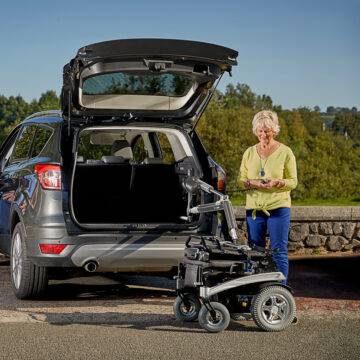
Boot hoists are the most popular and widely used lifting solution, and for good reason. They can be fitted in a wide range of vehicles and are compatible with hundreds of vehicle and mobility device combinations, making them suitable for many wheelchair and mobility scooter users.
A boot hoist uses a powered lifting arm to raise and place your wheelchair or scooter into the boot for you, removing the need for manual lifting entirely.
They’re particularly ideal for heavier powered wheelchairs, mobility scooters, and users or carers who want to minimise physical effort.
The key benefits include no heavy lifting, simple hand-held controls, and fast, reliable daily operation. Most importantly, they help protect your back, shoulders, and joints from strain and injury, making safe wheelchair loading effortless. Explore our full range of boot hoists for more information.
Platform Lifts
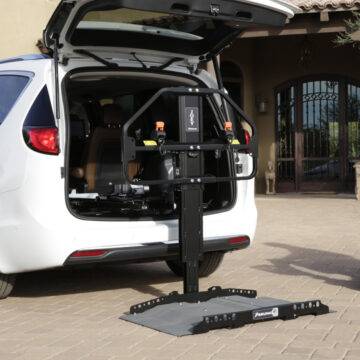
Platform lifts provide an excellent alternative for those who may not be able to use a boot hoist, particularly if bending down to attach lifting straps would be difficult, or if your mobility device is taller.
Typically fitted in van-type vehicles, platform lifts allow you to simply drive your wheelchair or mobility scooter onto the platform, step off, and use a remote control to safely raise it into the vehicle. View our platform lift in more detail and see if this is the right solution for you.
Because there’s no need to bend to attach straps, platform lifts offer a highly accessible and user-friendly solution, especially for those wanting maximum ease and independence.
They’re ideal for both independent users and carers, and remove the risks associated with lifting heavy mobility scooters manually.
Wheelchair Roof Boxes
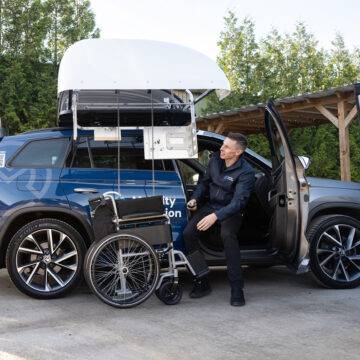
Wheelchair roof boxes offer a fully automated way to lift and store a folding wheelchair on your vehicle roof, all at the press of a button.
They’re particularly popular with independent drivers and anyone who wants to keep their boot free.
Unlike boot hoists, wheelchair roof boxes can be operated while you remain seated inside the car, making them an ideal solution for users who may not be able to stand or walk to the boot independently. Whether seated in the driver or front passenger seat, the entire process is powered, smooth, and effortless.
Find the Right Solution for You
Choosing the right lifting and stowage solution depends on your mobility, your vehicle, and your wheelchair or scooter.
Our team can:
- Recommend the safest option for your individual needs
- Check vehicle compatibility
- Demonstrate solutions in-person
- Help you avoid injury and long-term strain
Book a Mobility in Motion assessment today
What Are the Safe Weight Limits for Lifting a Wheelchair?
There’s no universal safe limit, because safety depends on:
- Your strength
- Your mobility
- Frequency of lifting
- Existing injuries
- Vehicle height
However, health and safety guidance recognises that repetitive lifting of even moderate weights significantly increases injury risk.
How to Lift a Mobility Scooter Into a Car Without Hurting Your Back
The honest answer: you shouldn’t have to lift it manually at all. Mobility scooters are often far too heavy for safe lifting.
A boot hoist removes the risk entirely, allowing the scooter to be lifted safely using powered assistance.
The Long-Term Solution: Remove the Physical Lift, Remove the Risk
If you regularly load a wheelchair or scooter, you’ll know it’s not just a physical task, it’s something that can gradually become more difficult, more tiring, and more worrying over time. Whether you’re protecting your own health or looking after someone you care about, loading adaptations aren’t just about convenience, it’s about protecting your body, your independence, and your peace of mind.
The right lifting aid can remove the physical strain completely, helping to prevent injury, reduce daily effort, and make every journey feel easier and more manageable. For many of our customers, it also brings something just as important: confidence. Confidence to go out more often, to travel without hesitation, and to stop worrying about injury.
But the most important step is choosing the solution that’s right for you.
Every vehicle, wheelchair, scooter, and person is different. That’s why booking a Mobility in Motion assessment is the best place to start. Our specialists will take the time to understand your needs, check your vehicle compatibility, and recommend the safest, most suitable option so you can move forward knowing you’re protected.
You don’t have to keep lifting and risking injury. Book your assessment today and discover a safer, easier way to travel.
FAQs
What are the risks of lifting a wheelchair into a car manually?
Manual lifting can cause back injuries, muscle strain, and repetitive strain injuries, especially when done frequently or with heavier mobility devices.
How to lift a mobility scooter into a car without hurting your back?
The safest way is to use a boot hoist, which lifts the scooter for you and eliminates manual handling completely.
What is the safe weight limit for lifting a wheelchair?
There is no single safe limit. Even lighter wheelchairs can cause injury when lifted repeatedly. Powered lifting aids are the safest solution.
Can carers get back injuries from loading wheelchairs?
Yes. Back injuries are extremely common among carers and family members who regularly lift mobility equipment.
Is there a way to load a wheelchair without lifting it?
Yes. Boot hoists, platform lifts, and wheelchair roof boxes allow safe, powered loading without manual lifting.

Driving with adaptations
Funding, Motability, and Options for Young Drivers: How to Make Adaptive Driving Possible
There are multiple ways to fund adaptive driving. Understanding your options early can save time, stress, and make the journey to independence smoother.

Driving with adaptations
Driving Adaptations Explained for Beginners: A Simple Guide for New Drivers
You might be closer to driving than you think If you’ve ever thought driving wasn’t an option because of a disability, here’s something important to know:…

Learner Driver
Can I Learn to Drive with a Disability?
Learning to drive is a major milestone, whether you’re aiming for independence, freedom, or simply the joy of being on the road. For teens and young…