Mobility Scooter Grants UK: How to Get Funding & Financial Help
Mobility scooter grants in the UK can help cover some or all of the cost of a mobility scooter, making independent travel more accessible. At Mobility in Motion, we’ve updated our guide to advise on what grants are available, who qualifies, and how to access them — and how funding can extend to vehicle adaptations such as boot hoists, transfer plates and swivel seats, that make travel even easier.
Understanding Mobility Scooter Grants
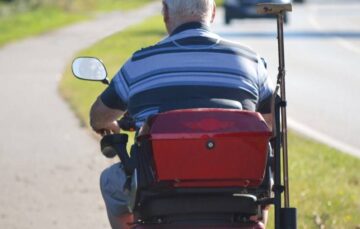
Mobility scooter grants are financial schemes designed to help disabled or older people purchase, upgrade, or maintain mobility scooters. They’re often administered by local councils, charities, and government schemes, and eligibility can vary depending on your circumstances.
The most common types of grants include:
- Government grants – Most notably, the Motability Scheme lets you exchange your qualifying mobility allowance for government funded mobility scooters or wheelchairs.
- Charitable grants – It’s possible that you may qualify for a grant or funding for your mobility scooter from a relevant charity. Charity Choice UK is the largest directory of UK registered charities and is a great resource to find an organisation that supports your specific condition.
- Healthcare-related grants – Some NHS or social services programmes provide equipment support for people with specific health needs.
Who Qualifies for a Mobility Scooter Grant?
Qualification depends on the individual scheme, but typically you must demonstrate:
- A medical or mobility need
- Financial eligibility (e.g., on certain benefits or low income)
- That a mobility scooter will improve independence and daily life
Most schemes provide eligibility criteria on their websites, and local councils can offer advice. It may be worth getting a social care needs assessment, carried out by your local authority, to get a written report of ‘desired’ and ‘essential’ additional equipment. This can help demonstrate your needs and support your application.
How Much Funding Can You Receive?
Funding amounts vary depending on the scheme, type of scooter, and any accessories or adaptations you may require. Some grants cover full costs, while others provide partial contributions.
Some schemes may allow you to get a grant for a second-hand mobility scooter, though new scooters are often preferred to ensure safety, reliability, and warranty coverage.
Beyond the Scooter: Adaptations That Support Mobility Scooter Users
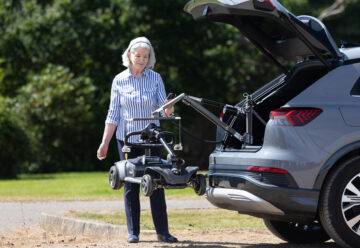
Grants aren’t just for the scooter itself. Many schemes also support adaptations that make travel easier and safer, especially if you want to transport your scooter in a car or need extra help getting seated comfortably. Examples include:
- Boot hoists – Power-assisted lifts that raise and store your scooter in the boot, removing heavy lifting.
- Transfer plates – Provides a stable temporary platform to aid transferring in and out of a vehicle.
- Swivel seats – Enable easy access by turning up to 90 degrees outside the vehicle and electronically lowers and raises.
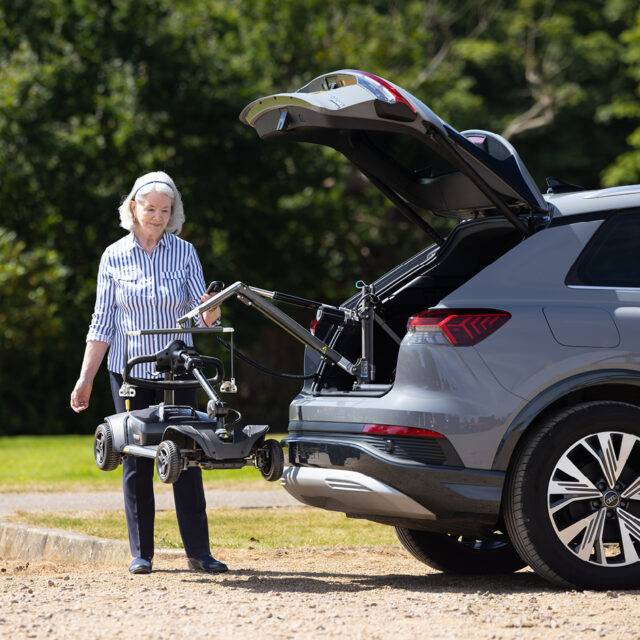
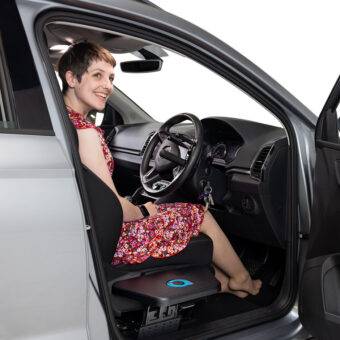
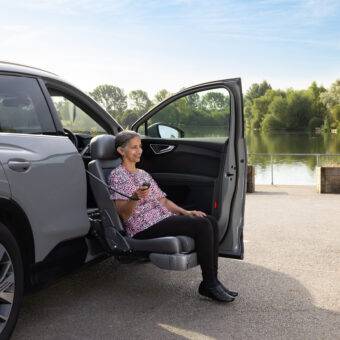
If you’re exploring funding options for vehicle adaptations, our detailed guide can help: Funding & Finance for Adaptations. At Mobility in Motion, we help customers daily to choose the right vehicle adaptations for their needs and can advise on the funding routes available.
Some funding schemes allow partial contributions for adaptations, particularly if they improve accessibility or independence.
How to Apply for a Mobility Scooter Grant
Applying is usually a step-by-step process:
- Check eligibility – Confirm your financial status, health condition, and local scheme requirements.
- Choose your scooter – Decide on the type of mobility scooter that suits your lifestyle. Consider future needs, including adaptations for transport.
- Gather supporting documents – Medical records, benefit letters, and any assessment reports can strengthen your application.
- Submit your application – Follow your council or charity’s process carefully. Deadlines and forms vary.
- Assessment and approval – Some schemes may request a professional assessment to confirm your needs.
While not always mandatory, a professional assessment can increase your chances of approval and ensure the scooter and adaptations meet your needs.
Tips for Maximising Your Funding
- Apply early – Grants are often limited and distributed on a first-come, first-served basis.
- Consider adaptations early – Include transport solutions, transfer aids, and vehicle modifications in your application.
- Check multiple sources – Charities, councils, and healthcare providers may all offer partial funding that can be combined.
- Use professional guidance – An assessment from a trusted mobility specialist can ensure your application is accurate and well-supported.
Next Steps: Make Your Mobility Journey Easier
Grants are a fantastic way to access a mobility scooter, but the right combination of funding and vehicle adaptations can make transporting and using your scooter far easier, safer, and more comfortable.
At Mobility in Motion, we specialise in vehicle adaptations to support mobility scooter users. Our team can:
- Advise on the most suitable vehicle adaptations, such as boot hoists, transfer plates, and swivel seats
- Confirm compatibility between your mobility scooter and your vehicle to ensure the right solution
- Arrange a mobility assessment at your chosen mobility retailer, allowing you to choose your mobility device and the adaptations you require at the same time
This ensures everything works seamlessly together; your scooter, your vehicle, and your adaptations. Explore the right vehicle adaptations for your needs and make transporting your mobility scooter simple, safe, and stress-free.
Book a Mobility in Motion assessment
Frequently Asked Questions About Mobility Scooter Grants UK
Can I get a free mobility scooter from the government?
In most cases, mobility scooters are not provided completely free by the UK government, but funding may be available through schemes such as the Motability Scheme if you receive a qualifying mobility allowance like PIP or DLA. Grants and financial support may also be available through charities, local councils, and other funding organisations to help cover some or all of the cost.
It’s also important to consider how you will transport your scooter, as grants may sometimes contribute toward essential vehicle adaptations such as boot hoists or transfer aids.
What charities help with mobility scooter grants?
Several UK charities may offer mobility scooter funding, depending on your circumstances. These include organisations such as:
- Turn2us
- Scope
- British Red Cross
- Citizens Advice
Each charity has its own eligibility criteria, and funding may be means-tested or based on medical need.
Can you get a grant for mobility scooter adaptations?
Yes, some grants and funding programmes can help cover the cost of vehicle adaptations needed to safely transport and use your mobility scooter.
This may include:
- Boot hoists to lift and load your scooter
- Swivel seats to help you get in and out of your car
- Transfer plates to assist with safe vehicle access
These adaptations can make a significant difference in maintaining independence and reducing physical strain for both users and carers. You can learn more in our dedicated funding and finance guide.
Who qualifies for mobility scooter funding?
Eligibility depends on the funding provider, but you may qualify if you:
- Receive a qualifying disability benefit such as PIP or DLA
- Have a long-term illness or mobility impairment
- Cannot walk long distances safely
- Meet financial eligibility criteria for certain charities
Some grants are also available to support carers and family members.
How long does it take to get a mobility scooter grant?
This varies depending on the funding source.
Typical timelines:
- Charity grants: 2 to 12 weeks
- Motability Scheme: 2 to 6 weeks
- Local authority funding: 4 to 12 weeks
Planning ahead is important, especially if you also require vehicle adaptations.
Can I get help choosing the right mobility scooter and adaptations?
Yes. Choosing the right combination of mobility scooter and vehicle adaptations is essential for safety, comfort, and independence. As vehicle adaptation specialists, Mobility in Motion can:
- Advise on compatible vehicle adaptations
- Recommend suitable solutions such as boot hoists or swivel seats
- Arrange professional assessments
- Liaise with mobility dealers to ensure everything works together correctly
This helps ensure your complete mobility solution is safe, practical, and future-proof. Contact our team today for tailored advice.
Are mobility scooter grants means-tested?
Some are, and some are not.
- Charity grants are often means-tested
- Motability eligibility is based on qualifying benefits
- Some local funding depends on financial circumstances
Even if you don’t qualify for one grant, you may still qualify for others.