Making Family Life Easier: Choosing The Right Vehicle For Disabled Families
Written by Emma Jewsbury at MotaClarity
We’re delighted to be back on the Mobility in Motion blog, sharing another article from the team at MotaClarity.
For many families, the car is an essential part of everyday life – from the school run and getting to work, to appointments, shopping and days out. For disabled families, choosing a vehicle can require a little more consideration to make sure it works for everyone.
Whether you’re transporting a wheelchair, accommodating mobility equipment or adapting the vehicle for a disabled driver, the right solution can make everyday journeys considerably easier.
Making Space For Mobility Equipment

One of the first things to consider is how easily a wheelchair, walking frame or other mobility equipment can be loaded and unloaded.
It’s not just about whether everything fits. Think about whether equipment needs to be folded, lifted or dismantled, and whether doing this several times a day is practical and comfortable.
A wide, square boot opening can make bulky equipment much easier to load, while a high or narrow opening can make access more difficult. It’s also worth checking the height of the boot lip, as a large step down can make lifting equipment far more awkward, while an adjustable boot floor can help create more space or a flatter loading area, making it easier to slide heavier items in and out.
For some families, all this may be straightforward enough in a standard car. For others, particularly where lifting or transferring is difficult, a different solution may be needed.
WAV Or Standard Car?
A Wheelchair Accessible Vehicle (WAV) can allow a wheelchair user to travel while remaining in their wheelchair, removing the need to transfer into a conventional car.
For families where transfers are manageable, however, a standard vehicle with suitable adaptations may offer greater flexibility.
There’s no universal answer – the right choice depends on the individual, their mobility needs and how the vehicle will be used day to day.
Don’t Forget The Whole Family
A vehicle needs to work for more than just the person with mobility needs.
Think about siblings, school bags, pushchairs, shopping, sports equipment and everything else family life brings with it. Is there enough room for everyone comfortably? Consider how your family’s needs might change as children grow and equipment evolves.
Looking beyond your current requirements can help you choose a vehicle that remains practical for longer.
Who Needs To Drive?
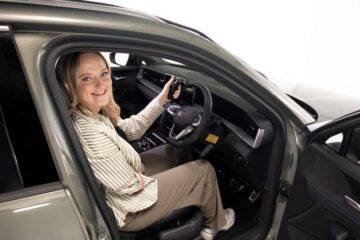
It’s also important to consider who will actually be behind the wheel.
For disabled drivers, adaptations such as hand controls or steering aids can help make independent driving possible. In other families, a parent, partner or another family member may be the main driver.
If several people will use the vehicle, the setup needs to work safely and comfortably for everyone – not just the person the vehicle is primarily intended to support. The good news is that many adaptations can be removed, folded away or quickly adjusted in just a few seconds, making it easy for another driver to use the vehicle in its standard configuration. Explore how driving adaptations can work for more than one driver here.
Planning For Changing Needs
Mobility needs can change over time. Children grow, wheelchairs and equipment can change, and transferring into a vehicle may become more difficult.
Before choosing a vehicle or adaptation, consider how your needs might develop. Will there still be enough room? Could the adaptation be changed if requirements evolve? Will the vehicle continue to work for the whole family?
Thinking a little further ahead can help avoid finding yourself needing another solution sooner than expected.
Could Adapt & Drive Be The Answer?
If you’d rather own your own vehicle, Adapt & Drive from Mobility in Motion could be a route worth considering.
Adapt & Drive helps customers buy a privately owned vehicle, either outright or through flexible finance options, and have it professionally adapted to meet their individual needs.
Customers can also benefit from Mobility in Motion’s exclusive manufacturer discounts, which can help offset, or even exceed, the cost of adaptations. This can make owning an adapted vehicle a more accessible option than you might expect.
And because the vehicle is privately owned, standard named-driver insurance rules apply through your chosen insurer, giving you greater flexibility over who can drive it, subject to your policy.
Whether you need driving adaptations, passenger solutions or simply want advice on finding a vehicle that works for your family, Adapt & Drive can help you find an accessible solution tailored to your lifestyle.
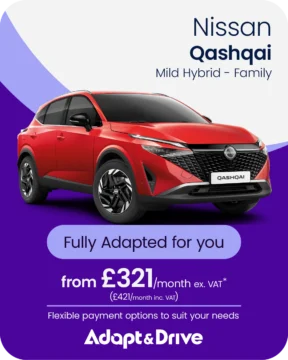
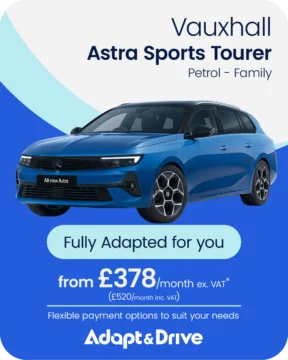
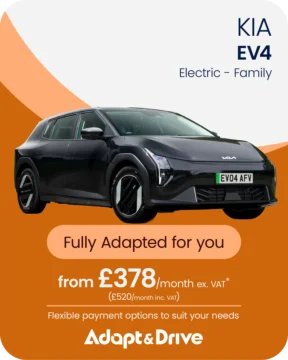
Explore some of our popular family cars
Exploring Motability
For those who are eligible, the Motability Scheme provides another route to accessible motoring, with the option to lease a vehicle and, where appropriate, have adaptations fitted to meet individual requirements.
For some families, this may be the ideal solution, with means-tested grants available through the Motability Foundation to help customers get the right solution for their circumstances. For others, adapting an existing vehicle or a specialist used WAV could be a more affordable option.
The key is finding an option that fits your family, your lifestyle and your mobility needs.
Making Everyday Journeys Easier
Ultimately, there isn’t one “best” vehicle for disabled families. The right choice is the one that makes everyday life easier.
Consider the journeys you make most often, what currently causes difficulties and what would make those journeys simpler. Whether that means a WAV, an adapted family car, a Motability vehicle or adapting the car you already own, there are options available.
With the right advice, your vehicle can work around your family — helping everyone get where they need to go with less stress and more independence.
A big thank you to the team at Mobility in Motion for inviting us to contribute to their blog once again. We hope this guide has helped you think through some of the key considerations when choosing or adapting a vehicle for disabled family life.
From everyone at MotaClarity, thanks for reading, and we’ll be back soon with more practical advice and disability motoring insights.

Accessible travel
Making Family Life Easier: Choosing The Right Vehicle For Disabled Families
Whether you’re transporting a wheelchair, or adapting the vehicle for a disabled driver, find out how to choose the right vehicle.

Driving with adaptations
Car Insurance for Disabled Drivers
Learn how car insurance works for adapted cars. Discover what to declare, common misconceptions and how Adapt & Drive can help.

Accessible travel
Who Can Drive a Motability Car?
One question continues to come up time and again: who can actually drive a Motability car? Here we outline the simple guidance.

Emma Jewsbury
A writer, marketeer and blogger with over 15 years' experience in the automotive and advertising industry, Emma graduated from the University of Sheffield in 2011 and went on to work at MB Advertising, handling the advertising and content needs of automotive clients, before moving on to Uber Agency, where she predominantly worked on TV campaigns for international brands. She now helps independent TV agencies to implement national media campaigns. Emma is a key part of the team at MotaClarity, and also runs the thegoodmoodmix blog.