Person Hoist vs Carony Swivel Seat: Which Transfer Solution Is Best?
Getting in and out of a vehicle can become one of the biggest challenges for wheelchair users and those with reduced mobility. Fortunately, there are specialist transfer solutions designed to make vehicle access safer, easier and more comfortable.
Two of the most effective disabled car transfer solutions are a person hoist for car access and the Carony wheelchair swivel seat. While both help users transfer between a wheelchair and a vehicle, they work in very different ways and are designed for different mobility needs.
If you’re comparing a wheelchair hoist vs swivel seat, or wondering whether a disabled passenger hoist for car travel would be more suitable than the Carony wheelchair system, this guide explains how each solution works, the key differences between them, and which option may be best suited to your circumstances.
Because every person’s mobility, wheelchair setup, seating requirements and vehicle are different, the best solution is often identified through a professional Mobility Assessment. At Mobility in Motion, our specialists can assess both your individual needs and vehicle compatibility to help you find the most suitable transfer solution
What Is a Person Hoist?

A person hoist is a lifting device designed to safely transfer someone from a wheelchair into a vehicle seat using a supportive sling. Sometimes referred to as a person hoist for car access or disabled passenger hoist for car travel, these systems are designed to help wheelchair users transfer safely into a vehicle when standing or assisted transfers are no longer possible.
The user is positioned in a specialist sling, which is securely attached to the hoist arm. The hoist then lifts and moves the individual into the vehicle, significantly reducing the physical effort required by carers and helping to make transfers safer and more comfortable.
Person hoists are commonly used when:
- The user is unable to stand or weight-bear
- Cannot support an assisted transfer
- Carers need to minimise manual lifting
- A safe and dignified transfer solution is required
For many families, a person hoist can make vehicle travel possible when other transfer methods are no longer practical.
Advantages of a Person Hoist
- Suitable for users with very limited mobility
- Reduces manual handling risks for carers
- Allows continued use of a standard vehicle seat
- Compatible with most vehicles
A Mobility Assessment from Mobility in Motion can help determine whether a person hoist is the most suitable option for your mobility needs, wheelchair setup, vehicle and daily travel requirements.
What Is the Carony Wheelchair Swivel Seat?
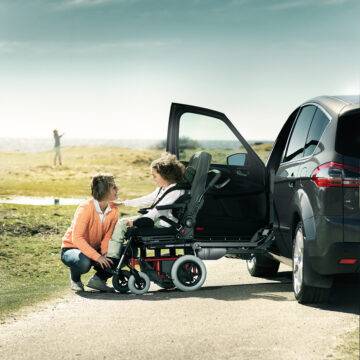
The Carony wheelchair swivel seat is a unique transfer system that combines a wheelchair and vehicle seat into one integrated solution. Unlike traditional swivel seats, the user remains seated throughout the entire transfer process.
Instead of transferring from a wheelchair into a vehicle seat, the user remains seated throughout the entire process. The Carony seat disconnects from a wheelchair frame and docks directly onto a vehicle-mounted swivel seat base.
This means the user can move from wheelchair to vehicle without needing to stand, pivot, slide or be lifted.
Advantages of the Carony System
- No lifting transfers required
- User remains seated throughout the process
- Reduces physical strain for carers
- Provides a comfortable and dignified transfer experience
- Can simplify everyday vehicle access
Because the Carony wheelchair system relies on both the user’s requirements and vehicle compatibility, our Mobility Assessment is the best way to establish whether it is the right solution for you.
Try them out for yourself!
Through our mobility assessments, we will assess your vehicle, mobility equipment, and personal needs to recommend the safest and most practical solution.
Pop your details in our form, and a member of our friendly team will be in touch to arrange an assessment at a convenient date and time for you.
Get in touch to book a mobility assessment
Person Hoist vs Carony Swivel Seat: Key Differences
Although both solutions help users access a vehicle, they achieve this in very different ways.
A Person Hoist Transfers the Person
A person hoist lifts the user from their wheelchair into the vehicle seat using a sling system. The individual is physically transferred from one seating position to another.
A Carony Transfers the Seat
The Carony wheelchair transfers the seat itself. The user remains seated throughout the process while the seat moves between the wheelchair frame and the vehicle-mounted base.
| Feature | Person Hoist | Carony Wheelchair Swivel Seat |
| How it works | Lifts user via sling into vehicle seat | Seat transfers directly from wheelchair to vehicle |
| Carer involvement | Typically yes, though some cases can be independent | Always requires a carer |
| Vehicle compatibility | Compatible with most vehicles | Slightly more limited choice of vehicles |
| Cost | More affordable; prices start from £2,995 (includes installation & 3-year warranty) | More expensive; starts from £5,104 (includes installation & 3-year warranty) |
| Retain use of current wheelchair | Yes | No, as the Carony becomes the wheelchair |
| Available on Adapt & Drive | Yes | Yes |
Which is easier for a carer to use: a person hoist or a Carony transfer system?
Both solutions are designed to reduce physical strain, but they work in different ways.
With a person hoist, the lifting is performed by the equipment rather than the carer. The user is supported in a sling and transferred using a handset-controlled hoist, although carers must be comfortable positioning the sling and operating the system.
With the Carony wheelchair seat, the user remains seated throughout the transfer, eliminating the need for lifting. However, the wheelchair base must then be detached and stored in the vehicle. While lightweight and easy to handle, this is an additional step carers should consider.
Another key difference is wheelchair storage. With a person hoist, the user’s wheelchair remains intact and can simply be pushed to the rear of the vehicle. With the Carony, the seat transfers into the vehicle, leaving only the wheelchair base to be stored.
Will Either Solution Work With My Vehicle?
Vehicle compatibility is one of the most important factors when choosing a transfer solution.
Not every vehicle can accommodate every accessibility product. Factors such as:
- Door opening size
- Seat height
- Interior space
- Vehicle layout
- Wheelchair storage requirements
can all affect which solution is most suitable.
A person hoist and a Carony system have very different installation and space requirements. During an assessment, our adaptation specialists will check and confirm vehicle compatibility with the car you have, or provide advice for compatible vehicles available on our Adapt & Drive Scheme.
Frequently Asked Questions
What is the difference between a person hoist and a Carony swivel seat?
The main difference is how the transfer takes place. A person hoist for car access lifts the user from their wheelchair into the vehicle seat using a powered sling. A Carony swivel seat transfers the seat itself, allowing the user to remain seated throughout the process without being lifted.
Do I need to lift the wheelchair user with a Carony seat?
No. One of the key benefits of the Carony wheelchair system is that the user remains seated throughout the transfer. However, the wheelchair base must still be detached and stored in the vehicle after the transfer is complete.
Can a person hoist be fitted to any car?
A disabled passenger hoist for car use can be fitted to many vehicles, but compatibility depends on factors such as door opening size vs the height of the user etc. During our Mobility Assessment, our specialists will check this and confirm if your current vehicle is compatible.
Are person hoists and Carony seats available on the Motability Scheme?
Many vehicle adaptations, including our person hoists for cars and the Carony wheelchair swivel seat, are available through the Motability Scheme. Our team can provide guidance on available options and vehicle compatibility during a Mobility Assessment.
These adaptations are also available on our new Adapt & Drive Scheme. If you’re not eligible for Motability, or would prefer to own your adapted car, Adapt & Drive allows you to access exclusive vehicle discounts which can offset or cover the cost of your adaptations. Discover how Adapt & Drive works here or view the cars currently available.
Not Sure Which Option Is Right for You?
Choosing between a person hoist and a Carony wheelchair swivel seat isn’t always straightforward. While both solutions can transform vehicle access, the right choice depends on much more than simply how the transfer takes place.
Important considerations include:
- Your mobility level
- Transfer ability and support requirements
- Whether you need to remain in a specific wheelchair or specialist seating system
- Vehicle compatibility
- Carer involvement
A Mobility in Motion Mobility Assessment allows our specialists to assess all of these factors and recommend the most suitable solution for your individual circumstances.
Book a Mobility Assessment
Our experienced assessors can demonstrate appropriate vehicle access solutions, evaluate your vehicle and help you find the safest and most comfortable way to travel.
Whether you’re considering a person hoist, the Carony system or another vehicle adaptation, a professional assessment provides the confidence that you’re choosing the right solution for your needs.

Accessible travel
Making Family Life Easier: Choosing The Right Vehicle For Disabled Families
Whether you’re transporting a wheelchair, or adapting the vehicle for a disabled driver, find out how to choose the right vehicle.

Driving with adaptations
Car Insurance for Disabled Drivers
Learn how car insurance works for adapted cars. Discover what to declare, common misconceptions and how Adapt & Drive can help.

Accessible travel
Who Can Drive a Motability Car?
One question continues to come up time and again: who can actually drive a Motability car? Here we outline the simple guidance.

Jonathan Walker
Jonathan Walker is Technical & Training Manager at Mobility in Motion, bringing decades of first-hand experience and technical knowledge of vehicle adaptations to his role.
As the son of David Walker OBE, founder of Autochair – Mobility in Motion’s group manufacturer – Jonathan has grown up around vehicle adaptations and has spent decades developing his hands-on knowledge of mobility products and solutions. Today, he leads Mobility in Motion’s technical and training department, sharing his expertise through product guidance, installation best practice and technical support to help ensure mobility solutions are fitted, used and supported safely and effectively.